

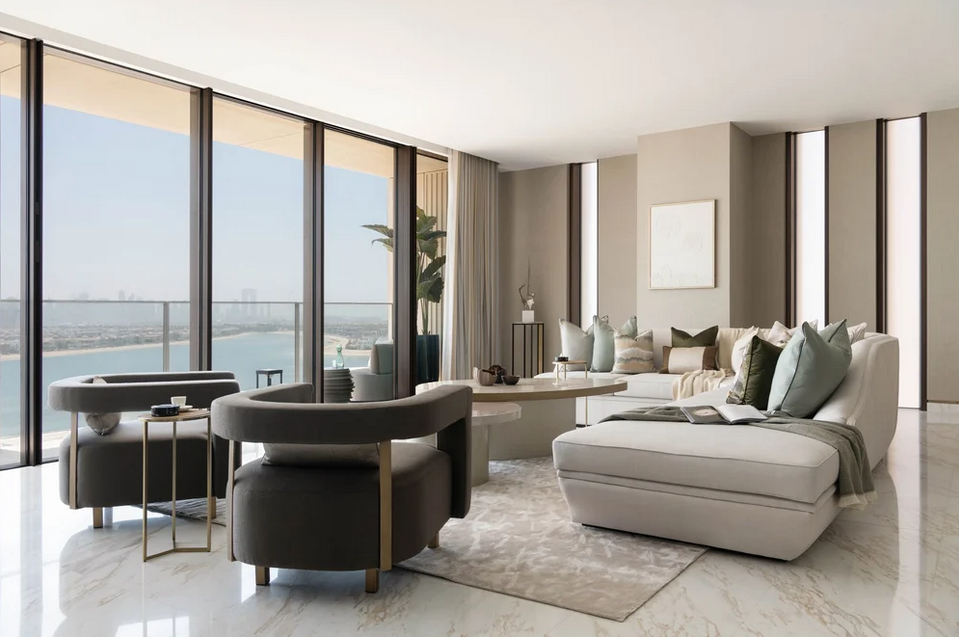
As the winter months bring cooler evenings to Dubai, many homeowners begin to reconsider how their interiors feel and function. A home does not need a complete redesign to feel warmer, but thoughtful changes to colour, materials, lighting and layout can make living spaces feel more comfortable and inviting.
Winter interiors are not defined by a single style or colour palette. The most suitable approach depends on the architecture of the property, the amount of natural light and how each room is used. From apartments with expansive glazing to larger villas with multiple living areas, a considered combination of textures and finishes can introduce warmth while remaining consistent with the home’s overall design.
Moving Beyond Cool, Uniform Interiors
Contemporary interiors often rely on white, grey and polished surfaces to create a clean and understated appearance. While these finishes can work well throughout the year, an interior where every surface has a similar cool tone may feel less comfortable during the winter months.
Introducing warmer neutrals can provide a subtle alternative without changing the character of the entire home. Shades such as soft beige, taupe, sand and muted brown work well alongside existing stone, timber and neutral upholstery. Rather than replacing every finish, homeowners can introduce these tones through rugs, cushions, curtains or selected furniture.
Read More: Transform Your Home with Stylish Aluminium Doors and Windows in Uttar Pradesh
Natural materials can also help create visual depth. Timber with a visible grain, textured stone, woven fabrics and matt finishes offer variation that smooth or highly reflective surfaces may lack. The contrast between different textures is often more important than adding multiple colours.
For homeowners planning a wider refurbishment, the best approach is to consider how warm and cool materials interact across the whole interior. A neutral floor, for example, may be balanced by timber joinery and softer upholstery, creating a layered appearance without relying on strong seasonal decoration.
Layering Textures for Comfort and Character
Texture is one of the most effective ways to make an interior feel warmer without making it visually heavy. This is particularly relevant in Dubai homes with contemporary architecture, where clean lines and large glazed openings can create spacious but sometimes minimal interiors.
In living rooms, a combination of upholstered furniture, textured cushions and a well-proportioned rug can soften hard flooring and define a seating area. Wool, linen and other suitable natural fabrics can introduce variation, while the specific material should be selected according to the household’s maintenance requirements and intended use.
Bedrooms provide further opportunities to layer different finishes. Upholstered headboards, textured bedspreads and curtains can create a softer setting while still allowing the room to maintain a simple and organised appearance. The choice of colour and texture should respond to the amount of daylight entering the room, as materials can look significantly different in strong natural light.
Window treatments also play an important role. In properties with large windows, curtains can soften the architectural lines of the room and provide greater control over privacy and daylight. Their fabric, weight and colour should be considered alongside the surrounding walls and furniture rather than selected as an isolated decorative feature.
The work of experienced interior decorators in dubai often involves balancing these layers so that a room feels considered rather than overly decorated. A limited palette with varied textures can provide more lasting visual interest than introducing numerous competing patterns or colours.
Using Lighting to Create a Warmer Atmosphere
Lighting has a significant influence on how colours and materials are perceived. A room with well-selected furniture and finishes can still feel uninviting if the lighting is too bright, poorly positioned or inconsistent with the space.
A layered lighting scheme generally provides greater flexibility. General lighting ensures that the room is adequately illuminated, while task lighting supports activities such as reading, cooking or working. Accent lighting can highlight artwork, architectural details or textured surfaces.
During the winter months, warmer lighting can complement natural materials and softer colour palettes, particularly in living and dining areas. However, colour temperature should be selected carefully to ensure that the room remains practical for its intended use. Kitchens and work areas may require clearer task lighting, while a living room may benefit from a combination of ambient and localised light sources.
Read More: The Hidden Role of Materials in Shaping Comfort and Cleanliness
Dimmable fittings can help a room adapt to different times of day. In an open-plan home, separate lighting controls for dining, seating and circulation areas allow each part of the space to function independently without creating unnecessary visual divisions.
Decorative light fittings should also be selected according to the proportions of the room. A pendant that is too small can become lost within a large space, while an oversized fitting may dominate the interior. The surrounding ceiling height, furniture arrangement and sightlines should all inform the final choice.
Introducing Seasonal Colour with Restraint
Winter does not require a dramatic change in colour. Small adjustments can create a different visual emphasis while preserving the continuity of the existing interior.
Earthy tones such as terracotta, muted green, rust and deep blue can be introduced through smaller elements, including cushions, artwork, occasional furniture or decorative accessories. These colours often work best when connected to shades already present in the flooring, joinery or upholstery.
A deeper accent colour may also be suitable for a more permanent feature, such as a study wall, a section of cabinetry or an upholstered chair. Before making a larger change, it is useful to view samples under both natural and artificial light. Dubai’s bright daylight can intensify some shades, while evening lighting may reveal undertones that are less apparent during the day.
The relationship between rooms should also be considered. A home does not need to repeat the same colour in every space, but a consistent selection of undertones and materials can create visual continuity. A muted green in one room, for example, may be balanced by a softer earthy shade in another if both relate to the same warm timber or stone finish.
Considering Comfort Alongside Everyday Use
A warmer interior should remain practical for everyday life. Materials need to suit the household, particularly in frequently used living areas and homes with children, pets or regular guests.
Rugs should be selected with consideration for cleaning and foot traffic, while upholstery needs to reflect how often furniture is used. Delicate fabrics may be appropriate for a formal sitting room but less suitable for a busy family area. Similarly, decorative accessories should not reduce the usable surface space needed for daily routines.
Furniture placement can also affect how comfortable a room feels. In larger villas, creating smaller seating arrangements can make an expansive living area easier to use without filling every available space. In apartments, carefully positioned furniture can define different functions while maintaining clear circulation.
A common mistake is to add too many seasonal elements at once. Excessive cushions, accessories or competing textures can make a room feel cluttered rather than warm. It is usually more effective to identify the surfaces that feel visually cold or underused and introduce a limited number of materials that provide contrast.
Creating Warmth That Lasts Beyond Winter
The most successful winter updates are those that continue to work throughout the year. Rather than treating warmth as a temporary decorative trend, homeowners can focus on materials, lighting and colours that provide comfort while remaining appropriate for Dubai’s climate and architecture.
Before making changes, consider how the room is used during the evening, when natural light is limited and the home is more likely to be occupied for longer periods. Reviewing the lighting, seating arrangement and material textures at this time can help identify where a simple adjustment will have the greatest effect.
A well-considered interior does not need to rely on seasonal decoration to feel comfortable. By introducing warmth through carefully selected materials, layered lighting and a balanced colour palette, homeowners can create spaces that remain practical, visually coherent and comfortable long after winter has passed.